

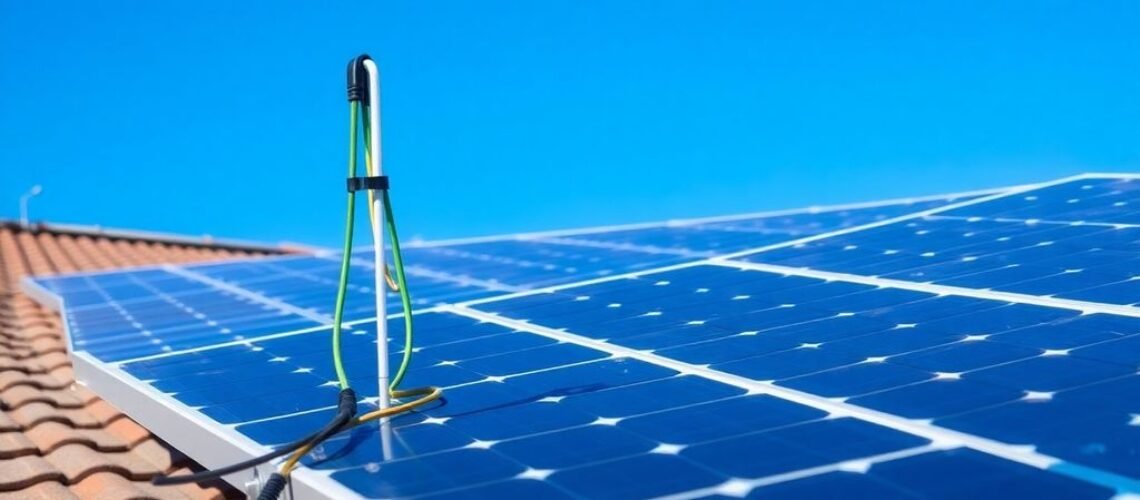
Protecting Your Solar Investment: The Art of Solar Panel Grounding
When you look up at a solar panel system in Kolkata, you see clean energy and savings. But what you don’t see is the unsung hero ensuring that system runs safely for decades: the Solar Panel Grounding System. It’s not the most glamorous part of your setup, but it’s arguably the most important for protecting both your equipment and your family.
Why Grounding Matters
Think of grounding like the foundation of a house—if it’s not right, nothing else matters. A proper grounding system protects your investment from electrical faults, lightning strikes, and dangerous voltage surges. Without it, your solar panels are vulnerable to damage from Kolkata’s unpredictable weather. The primary function is to carry fault current when a live conductor accidentally contacts a metal frame, creating a path with low enough impedance to trip the circuit protection device quickly. This prevents electric shock to anyone who might touch the system and reduces fire risk.
Grounding creates a connection to the physical earth, providing a reference point of zero volts and protecting against voltage fluctuations from lightning or other disturbances. Bonding, on the other hand, ensures all metallic components are electrically connected together, preventing dangerous voltage differences between metal parts.
Choosing the Right Grounding Manufacturer
The biggest mistakes happen when people underestimate the importance of quality components. Standards require earth resistance to be less than 5 Ohms, with the frame of the PV module array earthed at multiple points. A reliable manufacturer like Vivekearthing understands that advanced grounding compounds maintain stable performance even in varying soil conditions. They are known for advanced grounding gel and compounds that improve conductivity, reduce earth resistance, and protect electrical systems from faults.
A good manufacturer provides systems with long-term corrosion resistance and dependable electrical bonding. For instance, grounding lugs manufactured from high-grade stainless steel deliver reliable performance even in demanding outdoor environments. When selecting a manufacturer, look for those who understand that proper installation and connection of the grounding system are key steps in ensuring safety.
Key Product Specifications
Here is a typical look at what goes into a professional-grade earthing system:
| Specification | Typical Details |
|---|---|
| Electrode Material | Pure Copper or Copper Bonded Steel |
| Electrode Diameter | 40 mm to 88 mm |
| Electrode Length | 2 to 3 meters |
| Earthing Compound | High-conductivity, moisture-retentive gel or CCM |
| Compliance | IS:3043, IEC standards |
| Earth Resistance | Not exceeding 5 Ohms |
Usage and Installation
The primary use is to protect the inverter, panels, and mounting structures from becoming live during a fault. A quality system ensures connections between your panels, rails, and the earth remain solid for years. Installation involves placing metal rods or strips in the ground according to standards, connecting grounded conductors to busbars using clamps and connectors, and establishing connections with the electrical power system. A continuity check is then performed to ensure resistance is within permitted limits.
Conclusion
When calculating the cost of your solar plant, don’t cut corners on the grounding system. Choosing a reliable manufacturer like Vivekearthing ensures you get a system that not only meets standards but also gives you peace of mind. It’s the invisible shield that lets you enjoy the sun’s energy safely.
